


Beautiful Nail Salon Design in the U.S. for Vietnamese Owners: Process, Costs & State-by-State Insights


In the U.S., customers are accustomed to seeing beautiful nail salons – bright, clean, stylish, and comfortable. If your salon focuses only on skills without serious investment in nail salon design in the U.S., it’s hard to compete, especially in states with a high number of Vietnamese-owned salons.
Many business owners search everything from “nail salon design in the U.S.”, “build nail salon in the U.S.”, to “cost to open a nail salon in the U.S.” but still feel overwhelmed. This guide from UnikPlace gives you a quick overview: styles, layouts, design options, state codes, new build vs. remodel, and how to control your budget when working with UnikPlace.
Vietnamese Nail Salons in the U.S.: The Reality
Why are there so many Vietnamese nail salons, yet not all look great or attract crowds?
Vietnamese owners are excellent at doing nails, but not everyone understands the fundamentals of beautiful nail salon design in the U.S. and branding. Many salons are opened just because a space is available, with mismatched decor and furniture, making it difficult to create the polished, professional image that the best nail salons in the U.S. have online.
Some salons realize – after the fact – that their layout is inefficient, hard to photograph, and not “social media friendly.” As a result, even with decent traffic, they struggle to build a consistent customer base or increase prices.
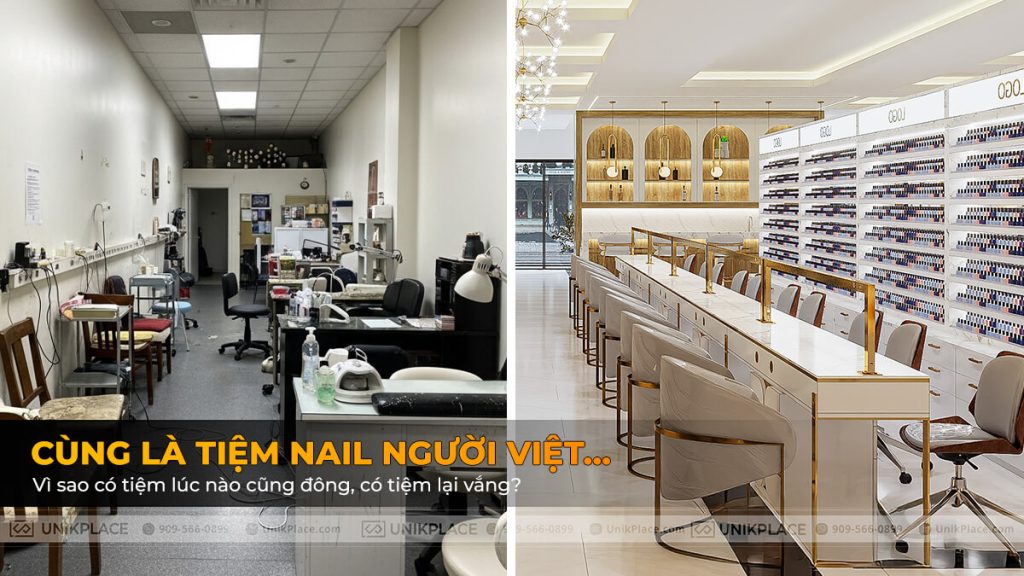
A clear contrast between a professionally designed nail salon and one that was set up ad hoc without any design direction
Customer Expectations in the U.S. for Nail Salons
American clients immediately notice things like smell, chair comfort, lighting, and whether the space feels spa-like. For them, a proper nail salon design in the U.S. must be clean, safe, aesthetically pleasing, and offer a bit of privacy.
They’re willing to pay more for a space that looks high-end. That’s why design isn’t just about beauty – it’s a strategy to move beyond price-based competition and attract higher-end clients.
3 Mistakes When Designing a Nail Salon Yourself in the U.S.
- Mistake #1: Using Pinterest images of beautiful U.S. nail salons but ignoring local building codes, chair spacing, fire exits, or HVAC requirements.
- Mistake #2: Buying nail salon furniture online in random styles and sizes – leading to a disjointed look and wasted space, especially for small salon layouts.
- Mistake #3: Not understanding the difference between a new build and a remodel, or calculating the respective costs and how to work with contractors – resulting in unexpected budget overruns.
Choosing a Style & Concept for Nail Salons in the U.S.
Popular Nail Salon Styles in the U.S.
The most popular design styles today include modern minimalism, Korean-inspired pastels, organic aesthetics with natural wood and greenery, and luxurious interiors featuring high-end finishes.
- For younger clients, the Korean-style nail salon is ideal: light, airy, with photogenic corners – often featuring pastel pink elements.
- For professionals and families, modern, clean, and neutral designs with a focus on lighting and materials offer more appeal.
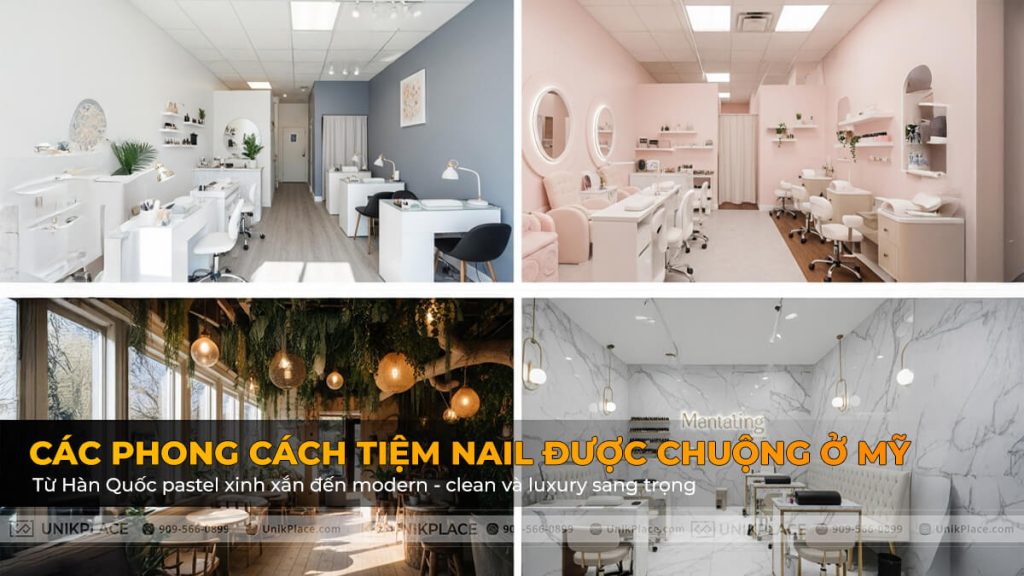
A roundup of four popular nail salon styles: modern, cute, rustic, and luxurious
Choosing the Right Concept for Your Area and Clientele
Your salon doesn’t need to look extravagant like the top salons in the U.S., but it should have a clear concept.
In areas with a strong Vietnamese community, you can blend Vietnamese and American aesthetics. In more diverse areas, stick to minimalism and functionality. A clear concept makes it easier to collaborate with your designer and finalize your nail salon interior design without getting lost in random ideas.
Example: Korean-Inspired or Minimalist Salon
A Korean-inspired salon might feature white-beige backgrounds with pastel pink accents, clean chairs, and cute decor perfect for Instagram shots.
A minimalist design could use white and gray tones, light wood, and warm lighting with fewer decor items – but everything intentionally designed for a sleek, professional, American look.
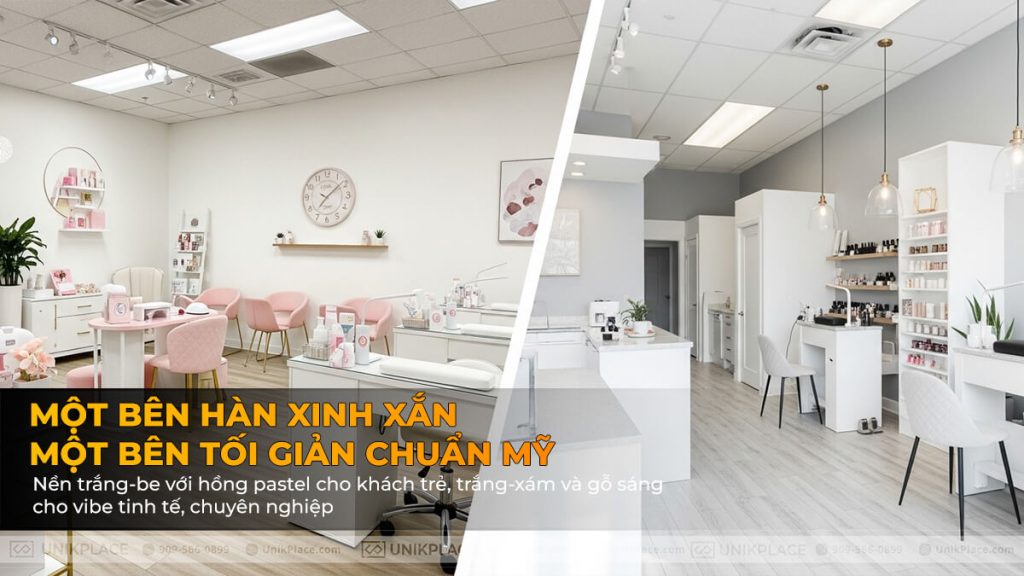
A comparison of two small nail salon design styles: one with sweet pastel tones and the other with a refined minimalist look
Design by State: California, Texas, Florida…
Designing Nail Salons in California: High Competition, Big Opportunity
In areas like Orange County or San Jose, nail salon design in California must consider intense competition and strict building codes. Rent is high, so every element – from seating to layout and facade – must be carefully calculated.
If done well, your salon can compete with the best nail salons in the U.S., tapping into a large, high-paying customer base.
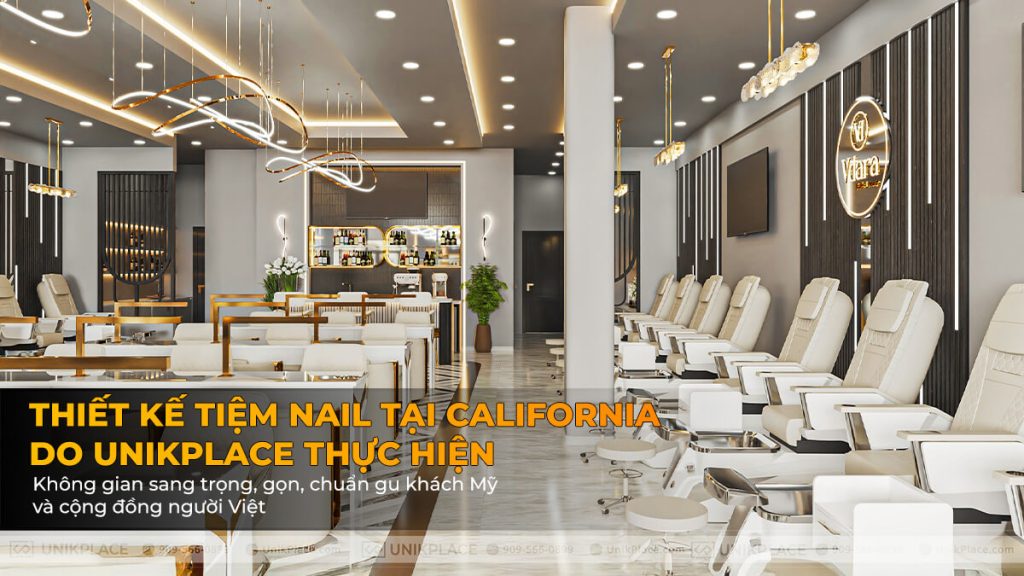
An interior design project for a nail salon in California by UnikPlace, featuring a modern style and a well-planned layout
Designing Nail Salons in Texas & Florida
With nail salon design in Texas, the advantage is larger spaces and lower rent, making it easier to create open layouts with more chairs and separate zones while still feeling comfortable.
In contrast, nail salon design in Florida often targets tourist areas with lots of walk-in clients, so the style should be bright, fresh, and photogenic to encourage check-ins.
In both states, with smart use of concept and interior design, even a small salon can still look high-end and professional.
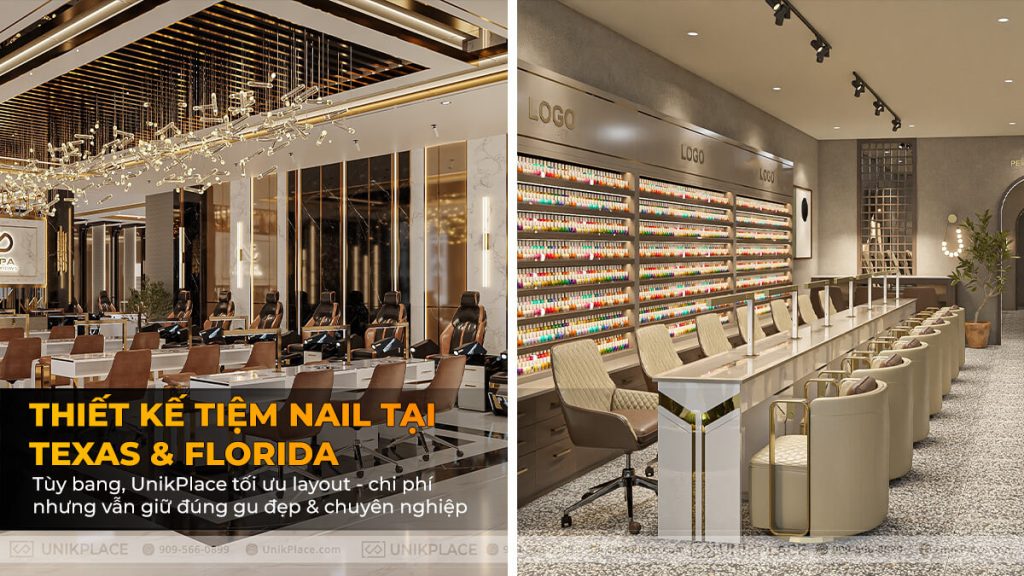
Two nail salons in two different states – showcasing the diversity in UnikPlace’s regional design styles
Be Aware of Local Codes, Safety, and Regulations
Each state – and even city – has specific rules about fire exits, sprinklers, plumbing for pedi chairs, HVAC, and exhaust. You can’t use one drawing for all states.
That’s why it’s important to work with a designer or contractor familiar with local requirements to avoid failing inspections. Many salon owners prefer to hire experienced U.S.-based nail salon design and build companies instead of handling it alone.
Nail Salon Furniture & Layout Standards in the U.S.
Layout: Pedicure, Manicure, Reception, and Waiting Areas
A typical layout – whether for remodel or new build – should begin with the reception area, then the waiting area, followed by manicure, pedicure, and support zones at the back.
Pedicure chairs should be deeper inside for privacy, manicure tables near the front for natural light, and reception designed to reflect your brand. Everything should be part of a unified interior design, not a mix of unrelated pieces.
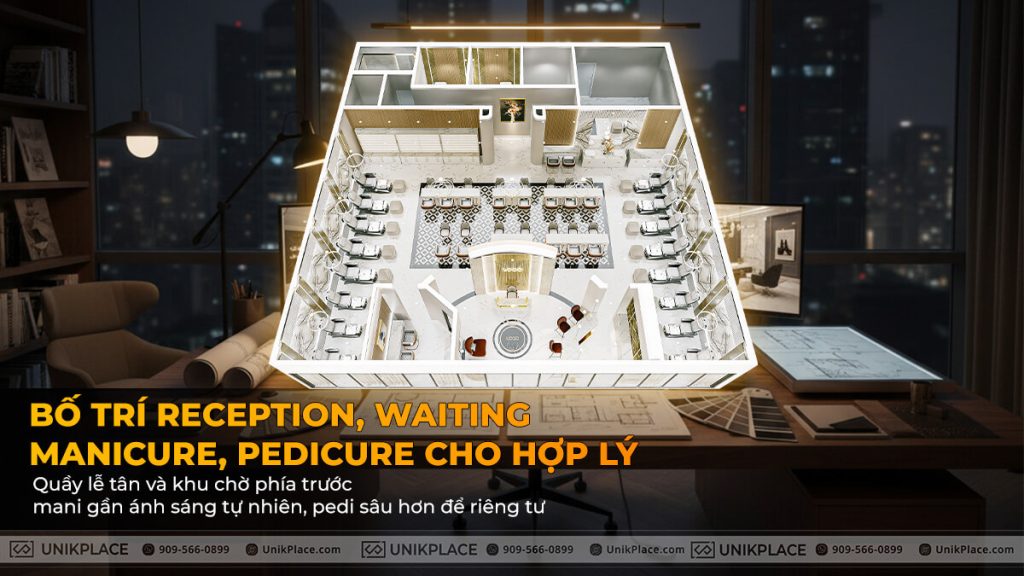
A wide shot of the nail salon with a clear layout and smart spatial arrangement
Small Nail Salons in the U.S.: Space-Efficient but Up to Code
Designing a beautiful small nail salon is a balance of aesthetics and code compliance. Even with limited space, you need to ensure walkways, chair spacing, washing zones, and waiting areas meet legal standards. Custom furniture is essential – off-the-shelf items rarely work for small salons.
Copying fast, ad-like layouts can backfire due to strict U.S. standards.
Sample Layouts: Small, Medium, Large Salons
- Small salon: 3-4 pedicure chairs, 3-4 manicure tables
- Medium salon: 6-8 pedicure chairs, with clearly divided service zones
- Large salon: Add private spa, waxing, or lash rooms
Regardless of size, nail salon interior design should always center around the customer experience and technician workflow – not how many chairs you can fit.
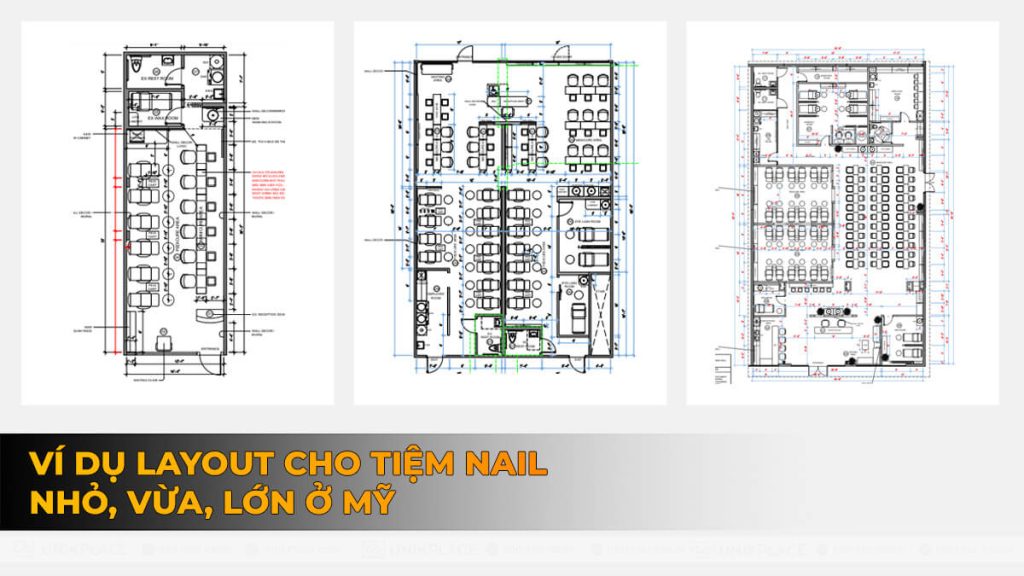
A floor plan design for a nail salon in three sizes: small, medium, and large
Building vs. Remodeling a Nail Salon in the U.S.
When to Build New vs. Remodel
Build new: If the space is empty, without infrastructure – this is a new build, and you need to calculate new build nail salon costs, from planning to execution.
Remodel: If the space was previously a salon and plumbing/HVAC are usable, remodeling is usually more cost-effective. Update layout, furniture, lighting, and colors to refresh the space.
Working with Designers & Contractors in the U.S.
Working with U.S. contractors is different from casually hiring someone in Vietnam. You need full design documentation, layouts, and technical drawings before a contractor can give you an accurate quote.
Many owners get multiple quotes – sometimes from those used to Vietnamese construction costs – and are surprised by the price difference. That’s why having a professional design team as a bridge is essential to translate your ideas into technical language and manage contractors effectively.
Build/Remodel Costs in the U.S.
The design cost is calculated at $1 per square foot, which includes a full moodboard (style direction), layout drawings, 3D renderings, and Dim Build drawings (construction guidelines for the build-out phase).
In addition, the furniture cost is estimated at approximately $35 per square foot – this is an average rate and may vary slightly depending on the materials, styles, and furniture brands selected by the client.
All of the above figures are reference pricing currently applied at UnikPlace, based on real-world project experience. They are provided to ensure transparency, clarity, and to help clients estimate their overall project budget from the very beginning.

A reference price list for building or renovating a nail salon in the US – prepared by the UnikPlace team
Design Costs & Optimization Tips
Main expenses when opening a nail salon in the U.S.
When opening a nail salon in the U.S., there are several essential cost categories that must be considered from the very beginning. These include:
- Design fees: layout drawings, 3D renderings, and Dim Build construction drawings.
- Blueprints: electrical, plumbing, fire exit, and overall salon safety plans – these must be created by a licensed local architect and are required for building permits. The cost is typically 4-5 times higher than standard design fees.
- Commercial space rental.
- Labor and construction costs.
- Furniture and interior fit-out costs.
- Supplies and equipment: machines, tools, products, and consumables.
How to Plan Your Budget
Rather than asking for a flat estimate, define your investment range. The designer and contractor will propose suitable solutions. Clear budgeting by category – build-out, furniture, equipment, decor – helps you stay in control instead of reacting to piecemeal quotes.
3 Ways to Save Without Compromising Aesthetics
- Lock in the concept early and avoid mid-construction changes – they add up fast.
- Use custom furniture designed and produced in Vietnam (like UnikPlace) instead of buying expensive pieces in the U.S.
- Decorate in phases – focus on layout, lighting, reception, and key furniture first. Add smaller details after opening.
Case Study: Color Nails Remodel (3,000 sqft by UnikPlace)
Before Remodel
- Outdated design from 10-15 years ago
- Heavy, dark furniture made the space feel cramped
- Poor layout and client flow
- No clear brand identity
- Outdated lighting, ceiling, wall finishes, and displays
- No modern, luxurious, or minimalist elements
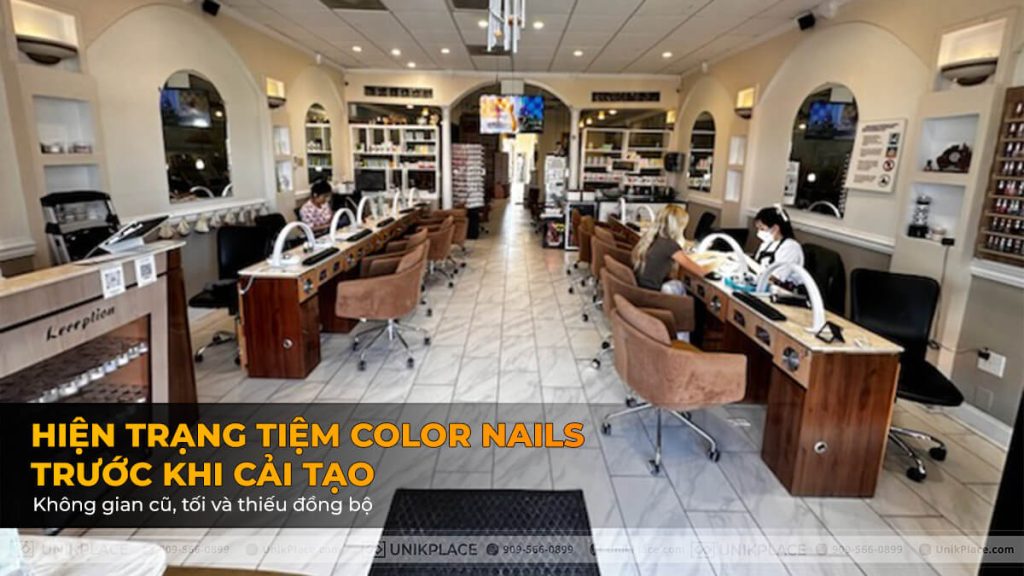
The original space of Color Nails was still basic, lacked focal points, and needed improvements to the customer experience
After Remodel
- Merged two spaces (1,200 + 1,800 sqft) into a unified layout
- Adopted a modern-luxury concept with bright white tones
- Smart zoning: small space holds reception & manicure area; large space for pedicure zone and a client bar
- Installed full doors in large zone for better sound control
- 9-ft ceilings enhance openness and elegance
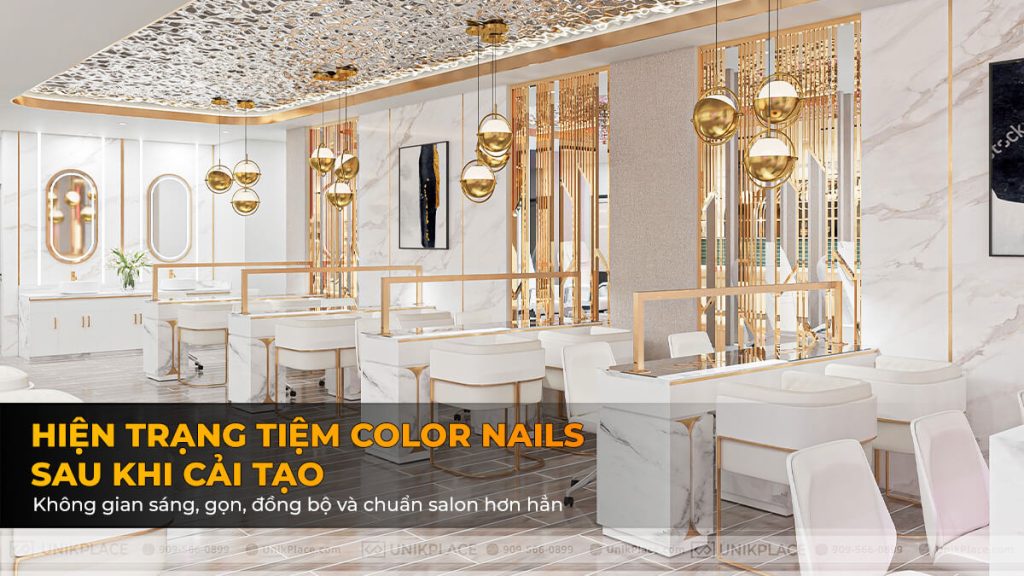
The space after renovation is completely transformed: better lighting, cohesive furnishings, and a clear layout between areas
Timeline & Total Cost
Project Timeline:
- Layout design: 3 days
- 3D rendering: 6 days
- BOQ (Bill of Quantities / Cost Estimation): 2 days
Design cost: From 2D layout to 3D design and Dim Build construction drawings, the fee is calculated at a rate of $1 per square foot. For the Color Nails project, with a total area of 3,000 sqft, the total design cost (including 3D renderings) was $3,000.
Should You DIY or Hire a U.S. Nail Salon Design Company?
Checklist: Should You Design It Yourself?
- Do you understand local codes (fire exits, HVAC, plumbing)?
- Have you worked with a city, landlord, architect, or commercial contractor in the U.S. before?
- Do you have time to manage the entire build and solve problems as they come up?
- Is your budget flexible enough to cover mistakes or rework?
- Are you aiming to scale your business later or just run it short-term?
Benefits of Hiring a Nail Salon Design-Build Specialist
When working with a specialized team, you get help from concept and layout to working with contractors, landlords, and local authorities. Everything – from material selection to budget allocation, lighting, acoustics, and brand presentation – is handled with care, reducing risks and saving time.
Recommended: UnikPlace Nail Salon Design & Build Services in the U.S.
UnikPlace is a trusted partner for Vietnamese nail salon owners in the U.S., offering a unique model that combines design services in the U.S., furniture manufacturing in Vietnam, and installation back in the U.S. This approach allows salon owners to achieve a professionally designed space that meets American standards while optimizing interior costs compared to having everything made domestically.
UnikPlace offers a comprehensive support package for salon owners, including free design consultation, full execution of 2D layouts, 3D renderings, and Dim Build construction drawings, as well as construction support through free matchmaking with trusted builders in the U.S.

UnikPlace’s strength doesn’t lie in individuals, but in seamless teamwork and a shared focus on achieving the best results for our clients
In addition, UnikPlace specializes in designing and producing custom furniture tailored to your brand concept, while also providing operational consulting to optimize workflow and enhance the overall customer experience.
From nail salon interior design, layout planning for California, Texas, or Florida salons, to both new builds and remodel projects, UnikPlace can provide tailored solutions that align with your space and budget.
FAQ – Common Questions About Nail Salon Design in the U.S.
1. How much does it cost to open a nail salon in the U.S.?
Depends on size, state/city, and whether it’s a new build or remodel. Core costs include build-out, design, furniture, machines, and decor. Best practice: define your budget, then have your designer break it down and optimize each part.
2. When should I build vs. remodel a salon?
If the space is empty and lacks MEP systems, you should build a new salon – costs will be higher but properly set up from the start. If the space was previously a salon with usable systems, it’s better to remodel – just update the layout, lighting, colors, and furniture to save costs.
3. How to remodel without breaking the budget?
Clearly define the remodel scope – focus on high-visibility areas like floors, walls, lighting, reception, chairs, and tables. Avoid touching plumbing or HVAC unless necessary. A detailed plan from the start will help keep remodel costs under control and prevent mid-project surprises.
4. How can I make my salon look like the best nail salons in the U.S. without overspending?
Finalize a clear concept and focus your budget on layout, lighting, reception desk, and chairs/tables – decor can be added over time. Combine U.S.-based design with Vietnam-made nail salon furniture (like UnikPlace) to reduce design and build costs while still achieving a high-end, professional look like many top nail salons in the U.S.
Whether you’re budgeting for a new build nail salon or planning a remodel, the rule is clear: the more defined your design from the start, the fewer issues you’ll face later. Good design helps you pass inspections, impress clients, and scale your business with confidence.
If you’d like to discuss your project – cost estimate, build vs. remodel comparison, or choose between modern, Korean, or luxury styles – contact UnikPlace. Our team will guide you based on your state, city, space, and budget – so every dollar you invest in design and construction brings long-term value.

 Interior Design
 New Build
 ReModel
 Custom Furniture
 Manufacturing
 E-Magazine


